
Course Detail

PROFESSIONALISM IN THE SOCIAL CARE INDUSTRY

PROFESSIONALISM IN THE SOCIAL CARE INDUSTRY

Welcome to Professionalism in the Social Care Industry. This is a comprehensive course designed to equip social care professionals with the essential knowledge, skills, and ethical principles required to maintain high standards in their work.

Through four structured modules, learners will explore the foundations of professionalism, ethical decision-making, professional boundaries, and effective communication. The course delves into industry expectations, the importance of ethics and law in care settings, and strategies for conflict resolution and self-development.

By engaging with interactive lessons, case studies, and hands-on exercises, participants will enhance their understanding of workplace conduct, accountability, and the impact of cultural diversity on professional boundaries. Real-life scenarios and practical applications will help reinforce critical thinking and ethical problem-solving skills.

    At the end of this course, learners will:

  • Understand and apply key professionalism and ethical principles in social care.

  • Navigate legal and regulatory frameworks governing the industry.

  • Maintain professional boundaries while working in diverse environments.

  • Develop effective communication and conflict resolution skills.

  • Enhance self-management and career growth through professional development strategies.

Upon successful completion, learners will receive a Certificate of Completion , demonstrating their commitment to professionalism in social care.

Understanding Professionalism in Social Care

Lesson 1: Introduction to Professionalism

Overview

Professionalism is a core value that underpins our work in health & social care, shaping the way we interact with clients, colleagues, clients’ family and the wider community. It involves more than just technical skills; it encompasses behaviours, attitudes, and ethical standards that demonstrate respect, responsibility, and commitment to high-quality care. In this lesson, we’ll explore the definition of professionalism in our everyday practice,

Video Tutorial

Lesson 2: Interactive Self Assessment

What Does Professionalism Mean to you in your Social Care role?

For each question, reflect on your role and experiences as a health & social care support worker. Rate your answers honestly using the scale below (choosing 1-5), then review the feedback at the end of the assessment to gain insights into your current understanding of professionalism in your role.

  • Statement 1 : Being punctual and reliable is a fundamental aspect of professionalism in my role as a support worker.

  • Statement 2 : It is important for me to maintain a positive and respectful attitude, even in challenging or stressful situations.

  • Statement 3 : Professionalism in health & social care means being able to manage my emotions and respond calmly to clients, regardless of their behaviour.

  • Statement 4 : Confidentiality and respecting privacy are essential principles that I uphold in my daily work with clients.

  • Statement 5 : My role involves working collaboratively with colleagues and other professionals, and I believe this is key to maintaining professionalism.

  • Statement 6 : Being empathetic and treating clients with dignity and respect is the most important part of being a professional support worker.

  • Statement 7 : Continuously developing my skills and knowledge is crucial for maintaining high standards of professionalism in my role.

Lesson 3: Uniqueness of the social care industry

Overview

In this lesson we look at why it is important to understand the uniqueness of the Social Care Industry in relation to the importance of professionalism within the sector. The social care sector accounts for about 13% of all jobs in the UK which makes Adult social care a significant economic contributor, adding an estimated £51.5 billion per annum to the economy in England in 2021/22. The uniqueness of the social care industry workforce in the UK has a significant impact on how professionalism is perceived and upheld within the sector. Let’s break down the factors that shape the social care workforce and how these factors influence professionalism:

Impact on Professionalism: The constant high demand means that care workers are often stretched thin, making it challenging to consistently deliver high-quality, person-centered care. This can affect workers’ ability to maintain professionalism under pressure. As a result, defining and upholding professional standards, including empathy, respect, and patience, becomes even more crucial to ensure quality care amid growing caseloads.

Impact on Professionalism: Low pay can affect motivation and perceived professional value. Social care workers often operate in challenging conditions without financial recognition that reflects the nature of their work, which may lead to feelings of undervaluation and low morale. Yet, professionalism within the industry requires workers to deliver high-quality care regardless of personal frustrations about pay, emphasizing the need for intrinsic motivation and commitment to care.

Impact on Professionalism: Working in an emotionally charged environment requires significant emotional resilience and self-regulation—key components of professionalism. The workforce must maintain a calm and compassionate demeanour even in challenging situations, which is a standard of professionalism that requires robust support from employers. This makes personal boundaries, stress management, and mental health support critical to sustaining professional behaviour.

Impact on Professionalism: With a shortage of skilled workers, many new hires may lack experience or training. Professionalism in this context means ensuring proper induction and continuous training to uphold care quality and safety standards. Additionally, shortages may lead to recruitment of staff with varying levels of qualification, so embedding professionalism across roles becomes essential for consistent service delivery.

Impact on Professionalism: With an aging workforce, the sector may face knowledge gaps as experienced workers retire. Professionalism, therefore, involves mentoring and passing down best practices to younger staff to maintain standards. Additionally, efforts to attract younger workers may involve promoting social care as a professional, respected career path, which requires a shift in public perception and emphasis on career growth and development.

Impact on Professionalism: The lack of clear career progression and inconsistent training opportunities can hinder workers’ professional development. A structured pathway encourages workers to view social care as a viable long-term career and motivates them to achieve higher standards of professionalism. Training plays a central role in establishing a strong foundation of professional knowledge and ethics across the sector.

Impact on Professionalism: The fragmented nature of the sector, with varying standards across organizations, makes it challenging to ensure consistent professionalism industry-wide. Local authorities, private providers, and charities may have different expectations and policies, leading to discrepancies in the understanding and execution of professional standards. A unified, sector-wide standard for professionalism would help establish a cohesive workforce.

Impact on Professionalism: Frequent regulatory changes and funding cuts can increase administrative tasks and put stress on workers. Professionalism here involves balancing compliance with the primary focus on delivering compassionate care. Additionally, underfunding may compromise resources for training and development, which are essential for maintaining professionalism, making advocacy for sustainable funding a key aspect of professional integrity.

Impact on Professionalism: The social care workforce is often undervalued and under-recognized, which can affect workers’ sense of professional identity. Building professionalism requires shifting public perception to recognize social care as a skilled, essential service, worthy of respect. Improving societal understanding of social care as a professional sector can elevate the motivation and morale of the workforce, furthering professional standards.

Impact on Professionalism: Flexible arrangements like part-time and zero-hours contracts create instability, making it harder for workers to commit to long-term professional growth. Despite insecure contracts, professionalism in social care still demands high-quality, consistent care. Encouraging providers to offer more secure roles can improve workers’ sense of responsibility, stability, and pride in their profession.

The social care industry is unique in its approach to professionalism because it grants significant autonomy to support workers. Unlike many professions where supervision is constant, social care often involves lone working and independent decision-making. Support workers are trusted to make critical, real-time decisions that affect individuals’ well-being, guided primarily by policies and procedures rather than direct oversight. This high level of responsibility demands a strong commitment to professionalism, as workers must rely on their ethical judgment, adhere to standards, and prioritise clients’ dignity, privacy, and safety, often without immediate supervision.

The autonomy inherent in social care work highlights the need for a strong, ongoing commitment to professionalism. In a field where workers often make real-time, critical decisions without supervision, professionalism serves as the foundation for ethical, reliable, and client-centered care.


By prioritising continued professionalism, the social care sector can ensure that workers are equipped to handle their responsibilities responsibly, maintain the dignity and safety of those they serve, and consistently provide quality care. This dedication ultimately contributes to a trusted, respected social care industry that values both its clients and its professionals.


In summary, the unique autonomy granted to social care workers demands that they uphold high standards of professionalism, enabling them to make responsible, ethical decisions that prioritize client well-being, maintain public trust, and ensure the industry’s continued growth and respectability.

Another unique factor is that In 2022-23, 26% of the adult social care workforce was Black, Asian, or minoritised ethnic, which is more diverse than the population of England. However, Black, Asian, and minoritised ethnic staff are underrepresented in managerial roles. This implies that there are many cultural, professional, behavioural differences within just the workforce. Managers are faced with the need to understand the differences and manage them fairly and competently.

Video Explaination

Module 2: Professionalism & Ethics in Social Care

Lesson 1: Interactive Self Assessment

Overview

Introduction

Professionalism and ethics are essential components of a successful social care workplace. We will remind ourselves of what we said professionalism was: Professionalism refers to the standards of Behaviour, conduct, and performance expected from individuals in the social care industry. It encompasses how one acts, communicates, and carries out their responsibilities on the job. Professionalism includes qualities like reliability, accountability, punctuality, competence, and respect for others in the workplace. It is about adhering to the norms, expectations, and culture of a profession to maintain a good reputation and professional relationships.

module2

Ethics, on the other hand, refers to the moral principles or rules that govern an individual’s Behaviour, often focusing on distinguishing right from wrong. Ethics guide decision-making based on values such as honesty, integrity, fairness, and respect for others. While ethics are relevant in both personal and professional settings, in a workplace context, they often involve ensuring that actions and decisions are morally justifiable and align with the ethical standards of the profession and the organisation. At this stage, we will introduce an interesting concept of aligning our decisions with the ethical standards set for the industry and the organisation. Ethics deals with the reason why, you made a certain decision.

relationship between ethics and the law:

Many Codes of Conduct are built on Acts of Law that govern specific industries or professions. For example, in social care, healthcare, or education, there are laws regarding safeguarding, confidentiality, discrimination, and health and safety that must be followed. Statutory regulations and legal frameworks provide the minimum standards of behaviour and practices. A Code of Conduct will incorporate these legal requirements to ensure that individuals and organisations comply with the law.

While the law provides a foundation, a Code of Conduct typically extends beyond the bare legal minimum by including professional ethics and best practices. These may not be strictly enforced by law but are necessary to uphold the integrity of the profession and ensure higher standards of care and responsibility.

For instance, laws might dictate that social care practitioners protect client confidentiality, but a Code of Conduct might provide more detailed guidance on how to manage sensitive information or deal with ethical dilemmas that arise in practice.

Violating the Code of Conduct may lead to disciplinary actions within the organisation or profession, even if the action doesn’t necessarily break the law. The Code thus provides a layer of accountability above and beyond the legal system.

Many professional Codes of Conduct align with regulatory bodies (e.g., the Care Quality Commission (CQC) in the UK for health and social care), which have their own regulations based on legal statutes. These organisations ensure compliance with both legal standards and professional expectations outlined in the Code of Conduct.

Sometimes, a Code of Conduct helps practitioners navigate ethical dilemmas where the law might not provide clear guidance. While the law is mandatory, ethical guidelines in the Code of Conduct may focus on doing what is morally right even if it is not legally enforced.

Codes of Conduct may also take into account international laws and standards, such as human rights law, labour laws, or environmental regulations, depending on the industry. For example, in multinational companies, the Code might be shaped by international conventions alongside local legal requirements.

A visual presentation of Professionalism, Ethics and the Law.
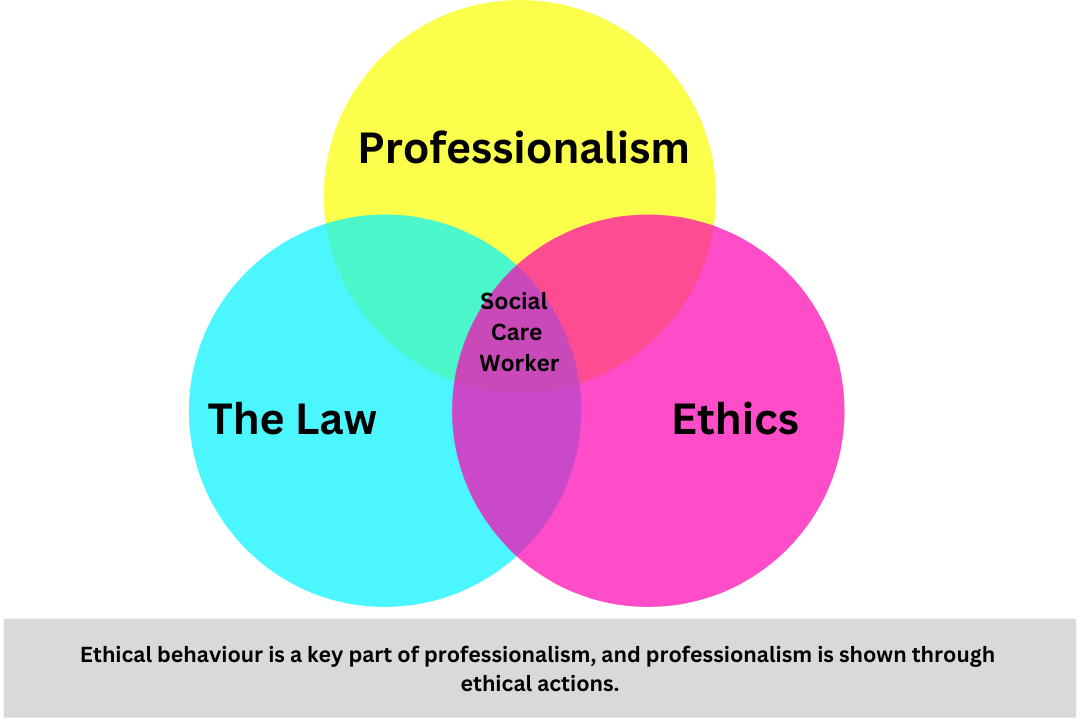
proffes

Practical Application

Ethical and Professional Response:

Maria is aware that respecting Mrs. Thompson’s independence and autonomy is ethically important, but she also knows her professional duty to ensure Mrs. Thompson’s safety. Balancing these priorities, Maria uses her professional judgment and communication skills to gently encourage Mrs. Thompson to use her walker, explaining that it will help her stay safe. Maria also speaks with Mrs. Thompson’s family and the care team to update them on this recurring issue, collaborating to find ways to maintain Mrs. Thompson’s independence while prioritising her safety.

How Ethics and Professionalism Combine:

In this scenario, ethics guide Maria to respect Mrs. Thompson’s autonomy and dignity, while professionalism ensures she approaches the situation safely and responsibly, adhering to safety standards and working collaboratively. Maria’s response exemplifies professionalism in action—she makes an ethical choice that respects her client’s rights while maintaining her professional responsibility to prevent harm. This approach ensures that Mrs. Thompson’s well-being is at the forefront, reflecting both ethical integrity and professional accountability in social care.

  • Hands on exercise

Can you think of a time in your work when professionalism and ethics have not been in alignment.

Module 3: Professionalism Boundaries

Lesson 1

Overview

Introduction

Professional boundaries are the limits and guidelines that define appropriate behaviour, relationships, and interactions between individuals in a professional context. These boundaries are essential for maintaining respect, trust, and a clear distinction between personal and professional roles. They help ensure that interactions remain ethical, respectful, and focused on the goals of the workplace or professional setting. As discussed in the previous lesson regarding the uniqueness of the social care industry, the workforce is extensively diverse and multicultural

The interaction of different cultures can have a significant impact on professional boundaries, as cultural norms and expectations regarding communication, behaviour, authority, and relationships can vary widely. When individuals from diverse cultural backgrounds work together, differences in how they perceive and manage boundaries may lead to misunderstandings, conflicts, or challenges in maintaining a professional atmosphere. In multicultural workplaces, being sensitive to and understanding these differences is essential for maintaining respectful, productive professional relationships while upholding appropriate boundaries.
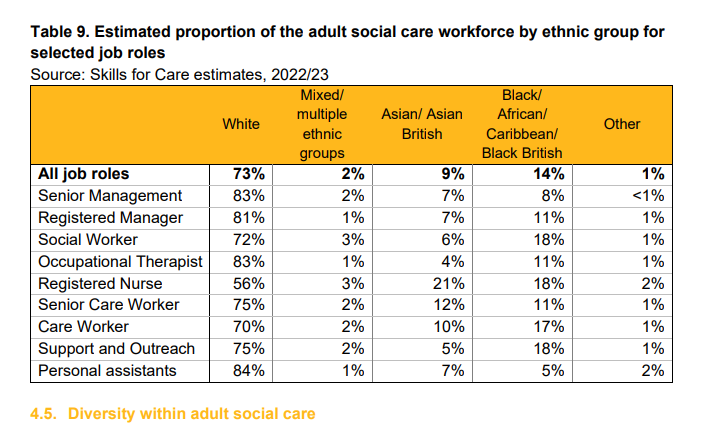
table

some key ways cultural values affect professional boundaries:

Direct vs. Indirect Communication: Some cultures value direct, straightforward communication, while others prefer more indirect, nuanced ways of expressing ideas or concerns. What may be seen as assertiveness in one culture could be perceived as rudeness or disrespect in another. Conversely, indirect communication might be misinterpreted as evasiveness or lack of transparency.

Formality vs. Informality: In certain cultures, professional communication is highly formal, with an emphasis on titles, honorifics, and respectful language. In others, informality is more acceptable, and first names may be used even in hierarchical relationships. Misaligned expectations about formality can blur professional boundaries, leading to discomfort or confusion.

Collectivism vs. Individualism: In collectivist cultures (e.g., many Latin American, African, and Asian cultures), personal relationships and group loyalty often play a significant role in professional life. There may be an expectation that personal and professional lives overlap, with more informal, close-knit interactions. In individualist cultures (e.g., North America, Western Europe), personal and professional boundaries are more rigidly separated, and people may expect a clear division between work relationships and private life.

Socialising Outside Work: In some cultures, it is common to socialize with colleagues outside of work, and doing so may be viewed as an important part of building trust and rapport. In other cultures, socializing outside the professional context may blur the boundaries between work and personal life, potentially leading to discomfort.

Power Distance: In high power-distance cultures (e.g., many African, Asian and Middle Eastern cultures), there is often a strong emphasis on respecting authority and hierarchy. Employees may avoid challenging or questioning their superiors. In contrast, low power-distance cultures (e.g., the U.K, U.S. and many Western European countries) tend to encourage a more egalitarian approach (The practice that promotes equality and fairness, aiming to reduce or eliminate hierarchical distinctions among individuals), where open dialogue and questioning authority are more acceptable. These differences can affect how professionals set boundaries with superiors or subordinates.

Decision-Making and Leadership: In cultures where hierarchical structures are respected, professional boundaries may include strict adherence to decision-making by senior leaders. In contrast, more collaborative or democratic cultures may encourage decision-making at all levels, potentially leading to friction if expectations are not aligned .

Emotional Restraint vs. Expressiveness: Cultures differ in how they handle emotional expression. Some cultures (e.g., many Western cultures) may encourage openness about feelings and emotions, while others (e.g., many East Asian & African cultures) value emotional restraint, particularly in professional settings. If colleagues from different cultures do not understand these differences, there could be misunderstandings about how to express empathy, resolve conflicts, or handle stress, affecting the emotional boundaries in professional interactions.

Touch and Proximity: Physical boundaries, such as appropriate levels of touch or personal space, can vary significantly across cultures. For example, in some cultures, a handshake or hug may be considered normal in professional settings, while in others, physical contact might be seen as inappropriate. Similarly, personal space preferences differ: some cultures are comfortable with close physical proximity, while others require more distance.

Eye Contact: In some cultures (e.g., Western cultures), maintaining eye contact is seen as a sign of respect and confidence. In others (e.g., some African, Asian and Middle Eastern cultures), prolonged eye contact may be viewed as disrespectful or aggressive, influencing perceptions of professional boundaries.

Gender Roles: Different cultural norms regarding gender can also influence professional boundaries. In some cultures, interactions between men and women in the workplace may be more formal or limited, while in others, these boundaries may be more relaxed. Gender dynamics can affect how authority is perceived, how closely men and women work together, and what forms of interaction are considered appropriate.

Dress Codes and Physical Appearance: Cultural expectations about professional attire and physical appearance also play a role in setting boundaries. For example, modesty may be a cultural requirement in some regions, impacting dress codes and what is deemed professionally appropriate.

Time Orientation: Cultures differ in how they value time and punctuality. In some cultures (e.g., the U.S., Germany), being on time is seen as a crucial part of professionalism, while in others (e.g., some Mediterranean or African cultures), a more flexible approach to time is accepted. Differences in time orientation can impact professional boundaries around deadlines, meetings, and work schedules.

Work-Life Balance: Cultural differences in attitudes toward work-life balance can affect professional boundaries regarding time. In cultures where work is highly prioritized (e.g., Japan), boundaries around personal time may be more relaxed, with long work hours being the norm. In other cultures, protecting personal time is valued more strongly, and encroaching on this can be seen as a violation of professional boundaries.

Organisational culture plays a crucial role in shaping and influencing professional boundaries within a workplace. It establishes the shared values, beliefs, norms, and behaviours that guide how employees interact with each other, how work is performed, and what is considered acceptable or inappropriate behaviour. The culture of an organisation can either strengthen or weaken professional boundaries depending on how it defines roles, communication styles, authority, and relationships.

Video Explaination

Scenerio

In this scenario, there are several key concerns related to professionalism in the workplace:

Dress Code and Professional Appearance :
Ujo’s choice to appear in the medication room in a nightdress and wrapper is unprofessional, particularly in a setting where medication is being administered. In healthcare and social care settings, maintaining a professional appearance is essential to establishing trust with clients and colleagues, and it also upholds the standards of the organisation. While Ujo may feel comfortable in this attire, it is important to adhere to company policies regarding appropriate work attire, especially when engaging in tasks that require focus and attention, like dispensing medication.

Respect for Workplace Policies :
There is a clear company policy in place regarding when and how the support workers should meet to administer medication. Ujo’s attire does not reflect adherence to this policy, which can be seen as a disregard for company protocols. Consistent adherence to workplace policies is a key aspect of professionalism, and failure to follow these rules can lead to confusion or breaches in safety, especially when handling medication.

Boundary Setting and Professional Relationships:
Mark feels uncomfortable but does not feel able to address the situation with Ujo. This raises concerns about communication and the ability to challenge unprofessional behaviour. A professional workplace should encourage open communication, where staff members feel safe to voice concerns without fear of conflict or retribution. Mark’s discomfort highlights a potential breakdown in the workplace culture, where respectful dialogue and the ability to set boundaries are not being fully supported.

Appropriate Work Behaviour and Accountability :
Ujo’s explanation that she plans to return to the sleep room immediately after administering medication might seem reasonable to her, but it does not change the fact that her attire is inappropriate for a professional setting. The situation suggests that Ujo may be prioritising her personal comfort over the expectations of her role. In a professional environment, employees are accountable for their actions and should consider how their behaviour impacts the team and the quality of care provided.

Team Dynamics and Mutual Respect:
The interaction between Ujo and Mark also reveals a potential imbalance in team dynamics. For professionalism to thrive, support workers should show mutual respect for one another. Mark’s discomfort should have been acknowledged, and Ujo should have taken the opportunity to consider how her actions might affect her colleague’s comfort level. A team that works professionally together needs to ensure that both parties are able to express concerns without fear of judgment or repercussions.

Key Takeaway
This scenario highlights the importance of maintaining professionalism through appropriate attire, adhering to workplace policies, fostering open communication, and demonstrating mutual respect within a team. It also underscores the need for a culture where employees feel empowered to address concerns, ensuring that both personal and professional boundaries are respected

Module 4: Communication & Professionalism

Lesson 1: Conflict Resolution

Overview

Workplace conflict arises when colleagues have differing ideas, interests, or beliefs. Such differences are a natural part of business; however, disagreements can sometimes escalate, leading to unprofessional or even unlawful behaviour.

Resolving conflict while maintaining professionalism is key to creating a positive work environment and achieving productive outcomes. Conflict can be between colleagues, colleagues and clients, managers and subordinates and so on. In reality, conflict in the workplace can be between anyone or any groups of people. Respect and professionalism should be at the core of every interaction.

Take a deep breath and avoid reacting emotionally. A calm demeanour helps keep the situation constructive and signals maturity and control.

Let each party express their perspective without interruption. Active listening shows respect and allows you to understand the root of the issue better. Paraphrase and summarise what you’ve heard to show you’re listening and validate their feelings.

Summarise the main points of disagreement to clarify the problem. A clear definition helps focus the conversation on finding a solution rather than assigning blame.

Avoid personal comments and keep your focus on the situation or behaviour, not the individual. This minimizes defensiveness and keeps the discussion professional.

Try to understand where the other person is coming from. Empathy can foster a better environment for collaboration and make it easier to reach a mutual understanding.

Frame the conversation around shared goals or mutual interests. This shifts the focus from competing viewpoints to collaborative problem-solving.

Encourage all parties to propose solutions. Joint problem-solving makes everyone feel more invested in the outcome and can lead to a more sustainable resolution.

Set clear boundaries and expectations going forward. Then, follow up to ensure all parties feel the issue is resolved and are adhering to the agreed-upon actions.

If the conflict persists, involve a neutral mediator, such as a manager or HR, who can facilitate the conversation impartially.

After resolving the conflict, reflect on what you could do differently in future situations. Professional growth comes from learning from both positive and challenging experiences.

Hands on exercise
Think of an instance where you have had to manage a conflict involving yourself and how you would rate your level of professionalism. Did you get the desired result? Did you understand what your colleague was saying? Could you have manged the conflict in a different way? If presented with the same scenario again, what will you do differently?

Lesson 2: Industry Etiquette

Overview

We will now look at the etiquette (code of polite behaviour) that should govern professionalism during disciplinary proceedings and when transitioning out of an organisation. This includes adhering to protocols, honouring contractual terms, and building positive professional relationships for long-term career success. As discussed in previous lessons, Professionalism is the foundation of respectful, responsible, and productive work environments. In the Social Care industry, where movement between organisations is frequent, maintaining professionalism can greatly impact career growth and reputation. Always aim to preserve relationships and leave a positive impression, regardless of current conflicts or plans to leave the organisation.

Disciplinary Proceedings – Focusing on Process, Not Conflict

There is always a reason for disciplinary proceedings. These proceedings are carried out in the workplace to give the employee the opportunity to weigh their actions against Policies & Procedures and Standards. Disciplinary Proceedings give the employee scope to learn and grow through feedback, and the employer, the scope to review their systems and policies.

It may be human nature to be defensive when disciplinary proceedings are taking place, however, from what we have been learning about professionalism, here are a few pointers to keep in mind~:

Stay Calm and Composed:
Responding calmly to feedback, even when it’s difficult, shows maturity and helps de-escalate tension.

Follow the Correct Procedure:
Understand your organization’s policies and procedures for disciplinary actions.
Engage openly, listen actively, and respond respectfully to any concerns raised.

Document Your Side:
Maintain a clear, factual record of your perspective and any communication related to the issue, staying within the organization’s guidelines.

Keep Emotions in Check:
Remember that disciplinary proceedings aim to address specific behaviours or concerns. Keep the focus on resolution, not confrontation.

Key Takeaway:
By following procedures and engaging respectfully in disciplinary processes, you demonstrate professionalism, which strengthens your credibility and relationship with the organisation.

Exiting the Organisation: Leaving on Good Terms

Very few individuals stay in the same job forever, and no employer is expecting you to. When the time comes for you to make a professional move from your current employment, consider the following:

Honor Your Contract:
Fulfil the notice period as agreed in your contract. Abrupt departures can disrupt the organisation’s planning, which is usually detrimental to client care & support. Such departures reflect poorly on your reliability.

Give Sufficient Notice (stipulated in your contract):
Providing notice allows the organisation to plan for your transition, which shows respect for your team and supports your professional reputation. Even though, you may be keen to start a new job, a new employer who hears from a currently employed applicant that they can start right away, has alarm bells ringing as this shows that the employee is not considering the clients whom they support.

Request a Reference:
Politely ask your manager or HR for a reference, highlighting your gratitude for the experience and opportunities you’ve had. A good reference is invaluable for future roles, especially in industries where references are often checked.

Key Takeaway:
Leaving respectfully and in good standing demonstrates integrity and ensures you’re remembered positively, which can be essential in an industry where professional networks are often closely connected.

Case Study: A Professional Transition

Scenario: Sarah, a support worker, has accepted a new job at a different organisation offering a slightly higher wage. Although tempted to leave immediately, she honours her notice period, informs her manager respectfully, and requests a reference.

Outcome: Sarah’s professionalism leaves a positive impression, and her former manager willingly provides her with a strong reference. Sarah’s former team appreciates her courtesy in helping ensure a smooth transition.

Learning Points: By following the proper exit protocol, Sarah preserved her reputation, avoided disrupting her team, and kept the door open for future opportunities within her professional network.

Sleeping Nights (A large part of what we do):

Sleeping Night Care involves support staff who are present overnight but they get to sleep, providing support only when needed, typically up to about two or three times during the night. On the other hand, Waking Night Care involves a support staff who remains awake throughout the night, ready to provide care and support as required. Sleeping Night Care is particularly beneficial for clients who may need occasional support during the night but do not require continuous assistance. The support staff can rest during quieter periods, ensuring they are sufficiently rested to continue providing support the following day.

Professionalism ensures that support staff do not make the client apologise for getting them up for assistance during the night. Professionalism also ensures that the client is not ignored during the night.

Disciplinary records have shown that some support staff on sleeping nights have been disciplined for complaining when woken up, for failing to wake up when called, for being inappropriately dressed when helping the client in the night and also not documenting sufficiently their involvement in meeting the outcomes for the client during the night.

Key Takeaway:
Although this is our job that we do every day and get paid, we must remember that it is the life of the client and usually in their home. We, as professionals need to respect the client and their home.

Hands on exercise
Consider that at some point, your loved one may require the service, What would you expect of the support worker in attendance during a sleep in shift?

Module 5: Self Development

Lesson 1: Personal & Professional Development

Overview

What is Personal and Professional Development?

Personal Development:
Improving personal skills and qualities, such as communication, empathy, and resilience, which contribute to better interactions with clients and colleagues.

Professional Development:
Gaining new knowledge, skills, and qualifications relevant to your role in social care, helping you stay up-to-date with best practices, standards, and industry changes.

Why Development is Important in Social Care

Enhanced Skills and Knowledge:
Social care is an evolving field with changing regulations, practices, and client needs. Continuous learning ensures you provide the highest quality of care and remain competent in your role.

Improved Client Relationships:
Developing skills in empathy, patience, and conflict resolution allows for more positive interactions with clients, leading to better outcomes and stronger relationships

Career Growth:
Professional development opens opportunities for advancement, whether moving to a specialized role, taking on more responsibility, or earning promotions.

Increased Confidence and Resilience: Learning and growth build your confidence and resilience, helping you manage challenging situations with professionalism and a positive attitude.

Enhanced Professional Reputation:
A commitment to development reflects a high standard of professionalism and dedication, which is respected by employers and clients alike.

How to Pursue Development in Social Care

Engage in Training and Certification
Attend relevant training sessions, workshops, or courses offered by your employer or external organisations. Speak to your employer during your supervision sessions.

Seek Feedback and Self-Reflect:
Regularly ask for feedback from colleagues, supervisors, and clients, and use it to identify areas for improvement.

Set Personal and Professional Goals:
Establish clear, achievable goals for growth, such as improving specific skills or achieving certain qualifications.

Join Professional Networks
Participate in professional organisations or support groups for social care workers, where you can learn from others’ experiences and insights.

Reflection Exercise:
Identify one skill you’d like to improve or a qualification you’d like to pursue. Write down three steps you’ll take to start this development journey.

Lesson 2: Self Management

Overview

Self-management in the workplace refers to the ability to regulate one’s behaviour, emotions, and tasks effectively without constant supervision, which is essential in the social care industry as there is a lot of lone working involved. It involves taking responsibility for one’s work, managing time and priorities, setting goals, and maintaining a positive and professional attitude, even under pressure. Self-management is essential for productivity, adaptability, and personal growth within a professional setting.

Key Aspects of Self-Management in the Workplace

Time Management:
Organising and prioritising tasks to meet deadlines.
Avoiding procrastination and effectively allocating time to high-priority tasks.

Goal Setting and Planning:
Setting achievable goals and breaking them into actionable steps.
Continuously monitoring progress and adjusting as needed to stay on track.

Self-Motivation:
Taking initiative and maintaining a positive attitude toward work, even in the face of challenges. Being driven by internal goals and values rather than needing constant external motivation.

Adaptability and Flexibility
Adapting to changing circumstances and remaining calm under pressure. Being open to learning and adjusting approaches based on feedback and new challenges.

Accountability and Responsibility:
Taking ownership of both successes and failures.
Following through on commitments, being reliable, and meeting organisational standards.

Emotional Regulation:
Managing stress and emotions, particularly in challenging situations.
Maintaining professionalism by responding calmly and constructively to setbacks or conflicts.

Self-management allows employees to work independently, boosts productivity, and fosters a positive work environment. It enhances job satisfaction, as individuals with strong self-management skills can balance their workload more effectively, contribute meaningfully to their teams, and pursue personal growth within their roles. Self-management is a vital skill for career advancement and is highly valued by employers in all industries.

Final Assessment

Course Overview

Certificate of Completion